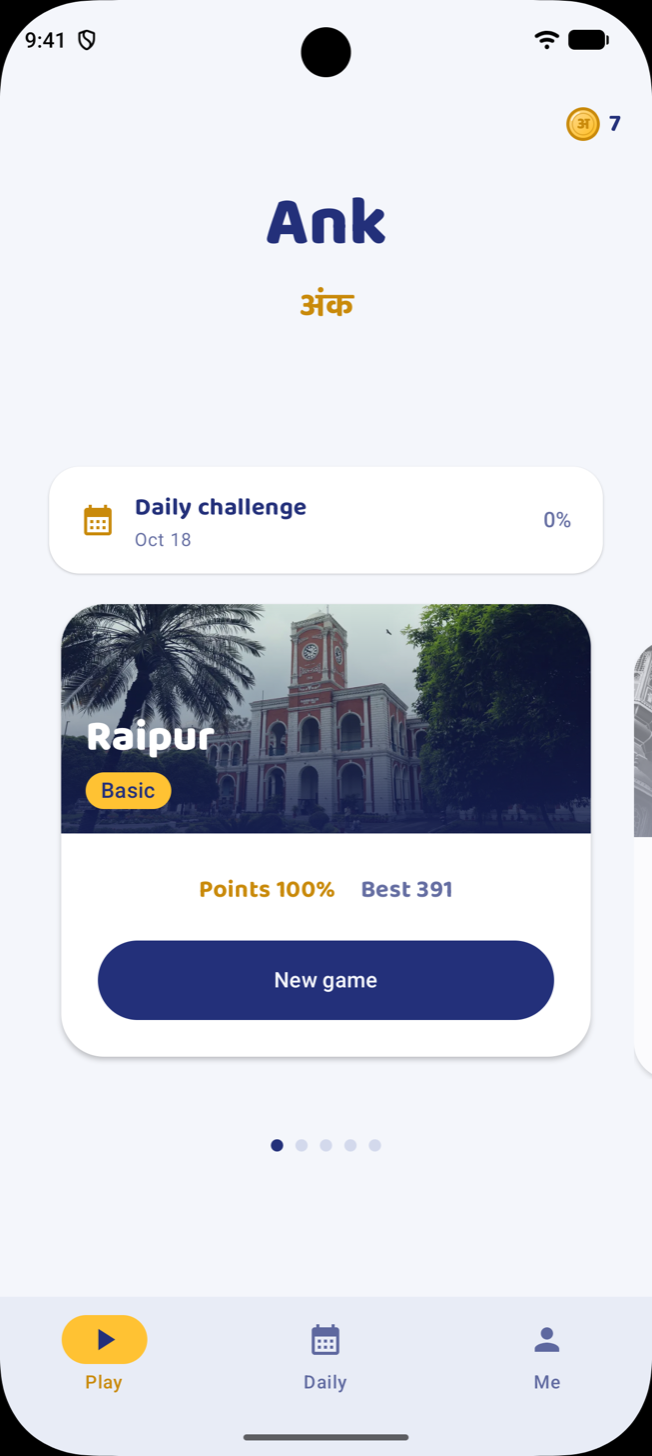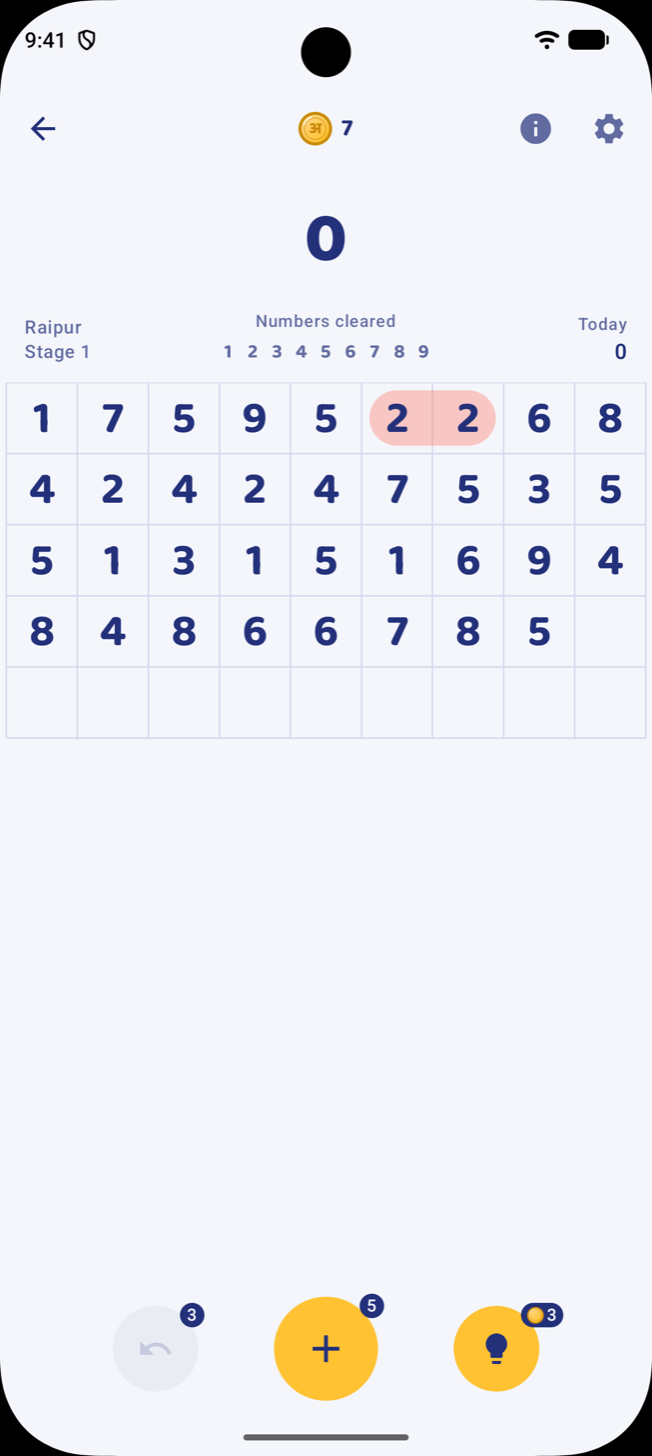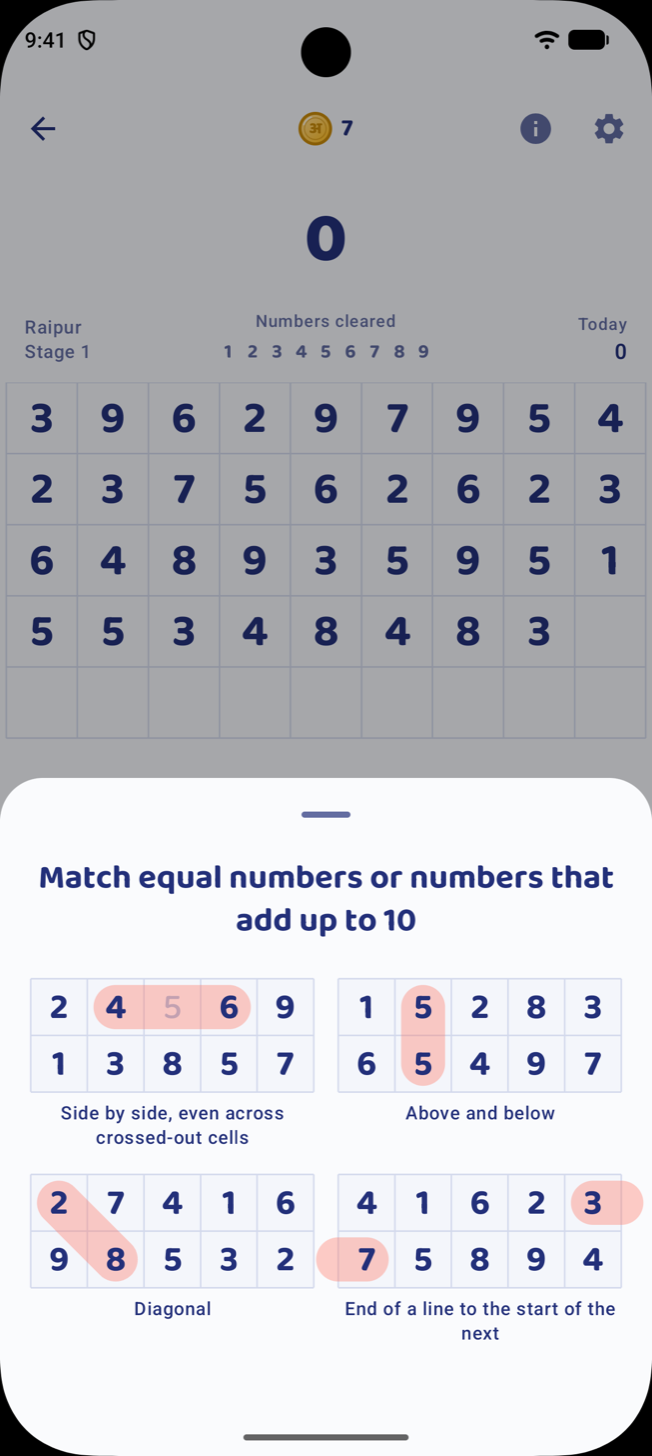



A calm number-pairs puzzle for Android: match equal digits or pairs that add up to 10, clear the board, and travel a trail of Indian cities. Built so ads never interrupt a move.
The problem
Number-pairs puzzles have a loyal audience and a familiar list of complaints. The popular ones show an advert every time you press the button that brings numbers back, lose your progress when you change phones, offer no undo, and leave you unsure what a hint costs. The game underneath is good; the business model sits on top of it.
The approach
Rules live in one place. Every rule — which pairs are valid, scoring, stages, the ”+” button, hints, undo, game over — lives in a pure Kotlin engine with no Android imports. The interface never decides whether a pair is valid; it asks. That made the rules testable on their own: the solver is checked against brute force on a thousand random boards, and a test plays fifty seeded games to the end.
One canvas, not hundreds of views. The board can grow to more than two hundred cells, so it is drawn on a single Compose canvas that paints only the rows on screen. It stays smooth on a 2 GB, 720p test device as well as a modern phone.
Ads with manners. Full-screen adverts appear only between stages, before results and on a new game, at most one every three minutes, and never in a player’s first two games. Pressing ”+” never shows an advert. Rewarded adverts are always the player’s choice — free hints, a doubled gift, an extra undo — and if no advert loads, no reward is handed out. A one-time Remove Ads purchase turns the full-screen ones off for good.
Tunable, not hard-coded. Coin rewards, the hint price, undo counts and advert caps all live in one configuration object, so balancing the game is an edit in one file rather than a hunt through the interface.
Difficulty by design. Each new board is generated from a seed and weighted so it allows only a few pairs before ”+” is needed, picked from a spread so players can’t learn a fixed count. Five cities — Raipur, Jaipur, Varanasi, Kolkata and Delhi — each get tougher and pay more.
The outcome
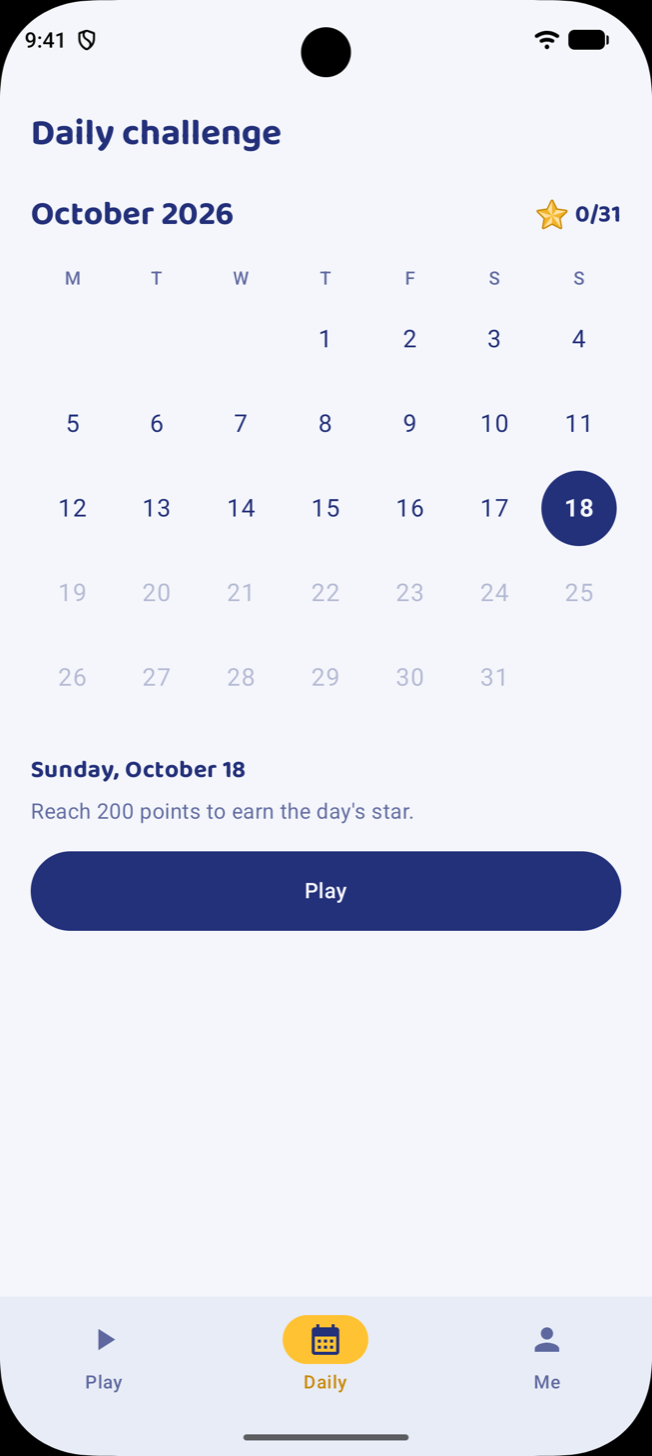
A complete Android game with a daily challenge and calendar, a Number Trail of five cities, coins and gifts, stats, light and dark themes, and cloud save through Google Play Games so progress follows a player to a new phone. Consent for personalised adverts in the EU and UK is asked for before any are shown, and analytics follow the same choice.
Nearly a hundred unit tests guard the engine, ads and data layers, with Compose UI tests driving the game screen through the real engine. Ank is in closed testing on Google Play ahead of its public launch.